If you’ve clicked on this post, chances are you’ve felt that gut-wrenching, gnawing feeling in your stomach while staring at the white of a fresh new page.
What do you paint in the first place? What if it doesn’t turn out right? And the list goes on and on…
I Have the Same Fears
Bet you didn’t realize it, but I have these thoughts running through my brain all the time when starting a painting. Yep — I have anxiety about starting too. So you’re not alone, and guess what: other people have these exact fears too. In fact, last week I asked a group of my misfitians why they were afraid to start, and over 60 people responded within days.
So How Do I Conquer This Fear?
Before I answer that question, I need to share a quick story first…

My Love Story
My husband and I just celebrated our 5-year anniversary last week at a sweet little church-sponsored pumpkin patch, and it got me thinking about when we first met.
He’s my best friend in the entire world now, but we definitely didn’t start out that way. Nope — rather, we kind of hated each other’s guts. The point is our first impressions weren’t peachy keen. Now, getting back to our first question — the fear of starting — and why it relates to this crazy story of first impressions gone wrong…

Why Am I So Afraid of Starting Watercolor?
There are actually a number of reasons you can find yourself terrified of starting, but chances are most of them are rooted in another question I’d like to cover first…
Why Is Watercolor So Hard in the First Place?
There are a variety of reasons, but for time’s sake I’m only going to spotlight two.
1) Mixing Ratios
Mixing watercolor paint ratios can be difficult. With other paints, the consistency is usually all prepared and ready for you to use right out of the tube. Watercolor, however, has different paint ratios for different techniques — a watery ratio for a light pastel mix and a thicker, more liquid ratio for a rich, bold color. You really have to have a good gauge of your water-to-paint ratio in your palette and know how to use it correctly. If your mixing ratios are off, then everything else is going to be off as well.
2) Paint
Yep, you heard me right — watercolor paint itself is another issue when you’re starting out. Watercolor paint is complicated. Is your paint transparent or opaque? Is it a dye or a pigment? What about intensity — does it dominate a wash, seeming to swallow the entire thing, or does it just sink to the page without really moving?
Also keep in mind that all watercolor paint brands, while they may have similar color names, each manufacture that color to their own specifications. Basically, if you buy French Ultramarine from Winsor & Newton, the same color name from, say, Daniel Smith or Schimsky, all three brands will have a slightly different take on that color.
And that’s not even to mention coming up with ideas to paint, drawing those ideas, using painting techniques at the appropriate times, and finally developing your own art style.
Pretty much, in summary — art is complicated.
Watercolor & Relationships
Now, getting back to my love story…
One of the reasons my husband and I didn’t hit it off from the start was that we didn’t take the time to actually get to know each other. Instead, we met and immediately had a bad misunderstanding that caused us to distance ourselves from one another. It wasn’t until we were forced to work with one another that we started to realize how much we actually had in common, and what good friends we could be. (Granted, this process took over four years, mind you.) That’s a story for another day…
So how is watercolor similar to relationships?
Think about meeting someone for the first time at a coffee shop for a simple conversation. You knew nothing about the person other than their name and a few basic facts.
Some of you might be intimidated to meet someone new, while others jump at the chance. The same is true with watercolor — some people feel so tense when purchasing new supplies that they don’t even want to crack the lid. Others jump into watercolor with enthusiasm. But both will almost certainly encounter the same problem: enthusiasm wanes and anxiety rises when a problem comes up and things don’t go as expected.
Just like on the coffee date, you’re bound to run into some awkward moments or misunderstandings. It’s bound to happen — and that’s when your enthusiasm wanes and your nerves begin to soar, because you don’t know what’s going to happen next.
The Wreck It Watercolor Journal
The same way you would on that coffee date — and what my husband and I learned some four years after our first meeting — simply keep talking. You’re bound to find something that sparks your interest.
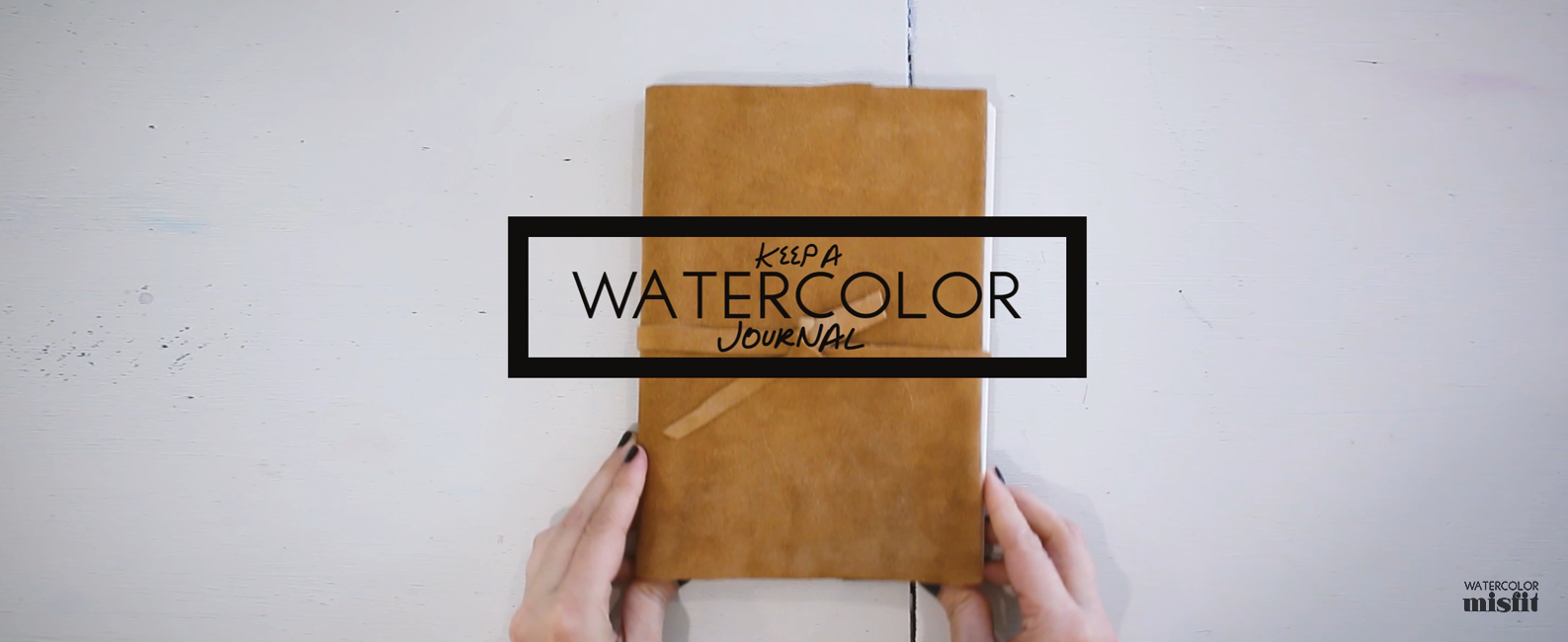
The same is true with watercolor. This is why learning your basics is crucial, and keeping a watercolor journal of your findings is a must. I recommend keeping a “wreck it” journal — not full of polished, completed illustrations ready to show the world, but rather a journal of experiments and watercolor thoughts. What colors do you prefer? What brands do you like, and why? How would you explain working through a basic flat wash — what worked and what didn’t? When experimenting with gradient washes, which colors did you like and which not so much? Moving on to art styles — what styles spark your interest? What styles seem to come easily to you? What do you want to communicate through your art? What could you improve?
By keeping a journal of your findings, you’ll not only learn your watercolors but also begin to chip away at the gnawing fear of just starting. Plus, after working through the book, you may start to see a bit of your own art style beginning to peek through.
Getting Started in a Wreck It Watercolor Journal
Below is a list of the first 10 pages you might want to try when starting your own wreck it journal.

Start With Mindset
- What first interested you in watercolor, and why?
- Create a list of artists you admire and list why they spark your interest.
- List your favorite colors and paint a swatch of each on this page. Then explain why these colors appeal to you.
Refresh the Basics
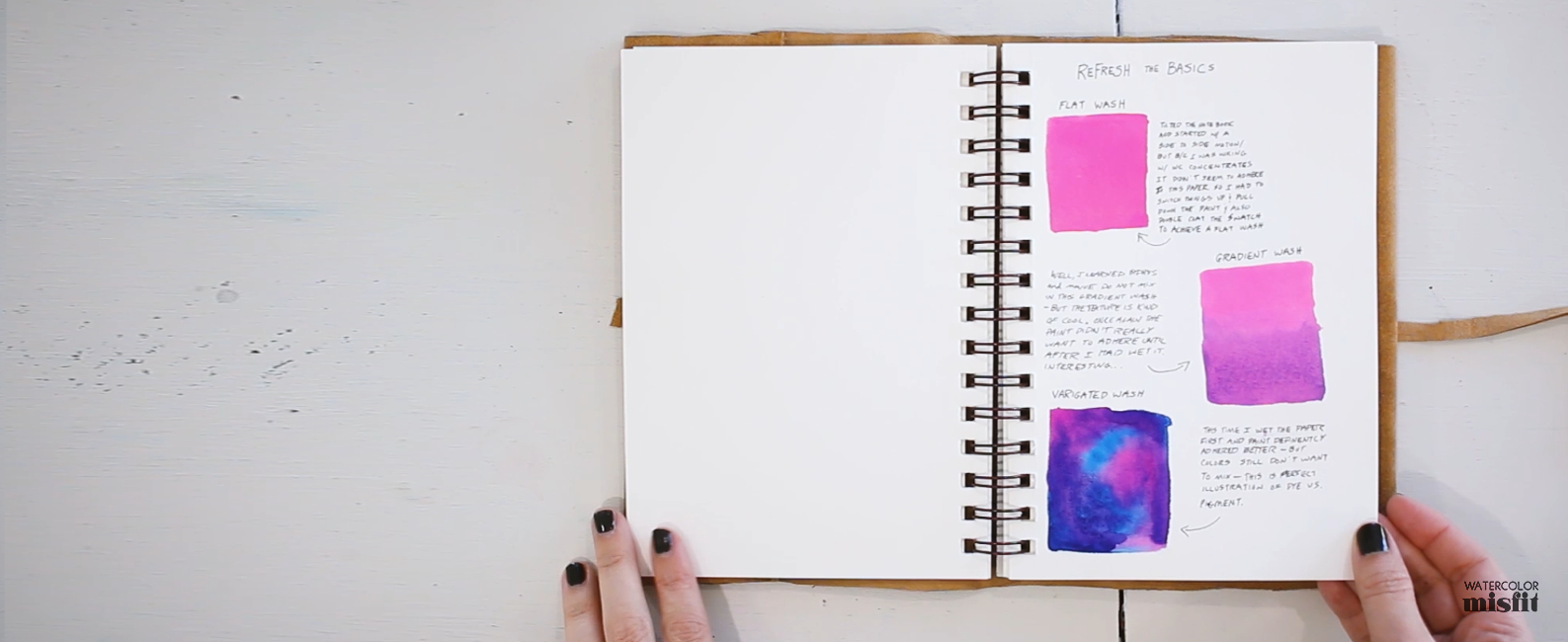
- Paint a flat wash, a gradient wash, and a variegated wash (list the steps of how you painted each and what went well and what didn’t).
- Paint two color wheels — one starting with red, blue, and yellow, and another with pink, turquoise, and a lemon or bright yellow. Which color wheel do you feel drawn to more?
- Create a simple mixing chart and list the color combos you enjoy.
- After working through your color chart, play around with two color combos, letting the colors slightly mix on the paper without fully blending. Note which colors create cool gradient combinations and which do not.
Exercising Your Mind, Hand, and Eye Coordination
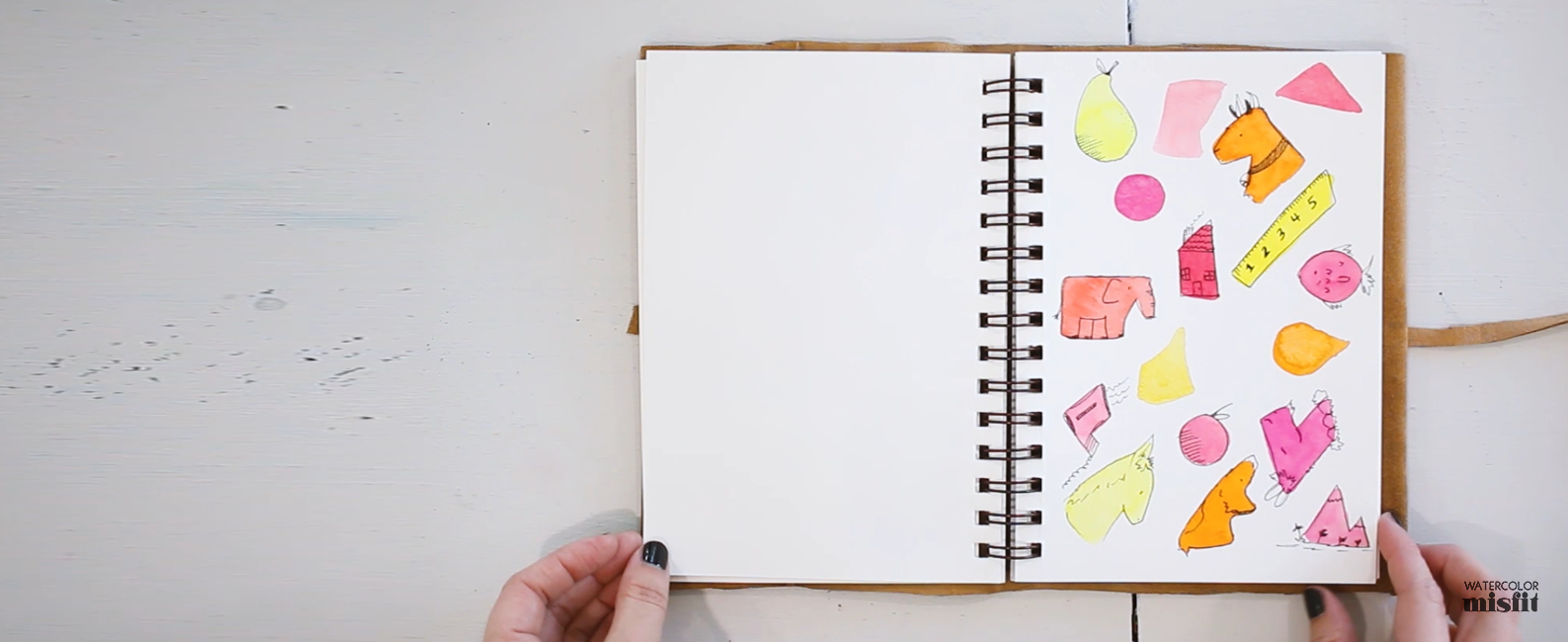
- Lay down an assortment of colored shapes, then once dry, use an ink pen to draw doodles on top of your shapes, creating little creatures or fully illustrated drawings. (I got this idea from one of Minnie Small’s videos and thought it was a great activity for imagination and drawing skills.)
- Draw the same drawing three times and try shading it in three different ways with one color. (If you’re intimidated to draw, use one of my templates and simply trace it three times.) How did your perception of the creature change with shading?
- Once again, draw the same drawing three times, but this time paint it in three different formats: 1) using only watercolor, no ink; 2) using pastel colors with inking; 3) using rich watercolors with inking. Which style do you prefer?
These last three exercises are great for working through shading techniques as well as determining your own unique art style.
And that’s it for this post! I hope you enjoyed it, and I hope to see your awesome wreck it journals soon!