Watercolor Paint – What Do I Buy?
If you’re new to watercolor, the very first supply you’ll want to pick up is either paper or paint. The problem is there are so many varieties of paint when it comes to watercolor. So what’s best for you, and what are the advantages and disadvantages of each option? Here’s what I’ve learned over the years.
Cheap vs. Expensive
The first thing to address is pricing. You’ve probably noticed that some paint is super expensive, while other paint is a lot kinder on your wallet. There are two options when it comes to any watercolor paint: student grade and artist grade (also called professional grade).
Student Grade Paint
Student grade paint, as the name implies, is made for students who are experimenting with and learning watercolor without spending a lot of money on high quality paint.
- The advantages: as mentioned earlier, these paints are great for experimenting with new colors and testing out new techniques, since they’re so much cheaper than other options. Personally, I love trying out new paint colors and testing to see if they’ll work well with my current palette. Buying student grade paint takes a lot of the pressure off of me to make sure I use every ounce of color correctly. It also gives me more freedom to just play and experiment for fun.
- The disadvantages: the biggest problem for me is that most of these paints are very opaque, or can appear chalky. Most manufacturers cut down on the pigment used in these colors and add more filler (or glue) to keep the price down. That’s also why your paintings can appear heavy and more “acrylic” like when you paint with student grade paints. Another disadvantage is they tend to be less vibrant, which is also due to the lack of pigment.
- The solution: one way to solve the vibrancy problem is to buy watercolor tube paint. This is why I recommend Winsor & Newton’s Cotman series in tube form. Since these paints are fresh right when they come out of the tube, you can achieve very bright colors even with student grade paint.
Artist Grade Paint
Artist grade paint, as the name implies, is made for artists who want their paintings to look vibrant and/or built to stand the test of time. These paints are made with rich pigments and less filler. Manufacturers also chart each color’s individual makeup, such as light-fastness (how long it takes for the color to fade), transparent vs. opaque, and granulation (texture).
- The advantages: as mentioned earlier, these paints are great for vibrant colors that glide across the page. They’re usually more expensive because the pigments inside are ground into finer filaments, meaning they appear smoother and less grainy on the page. These paints will also last much longer than student grade paints, since you need so little pigment to create vibrant colors.
- The disadvantages: besides price, the biggest one I’ve found is not being able to see the paint color or experience it until after I’ve bought it. I’ve wasted a good deal of money over the years just trying different brands and colors to discover what works best for me. But there’s a solution to that problem.
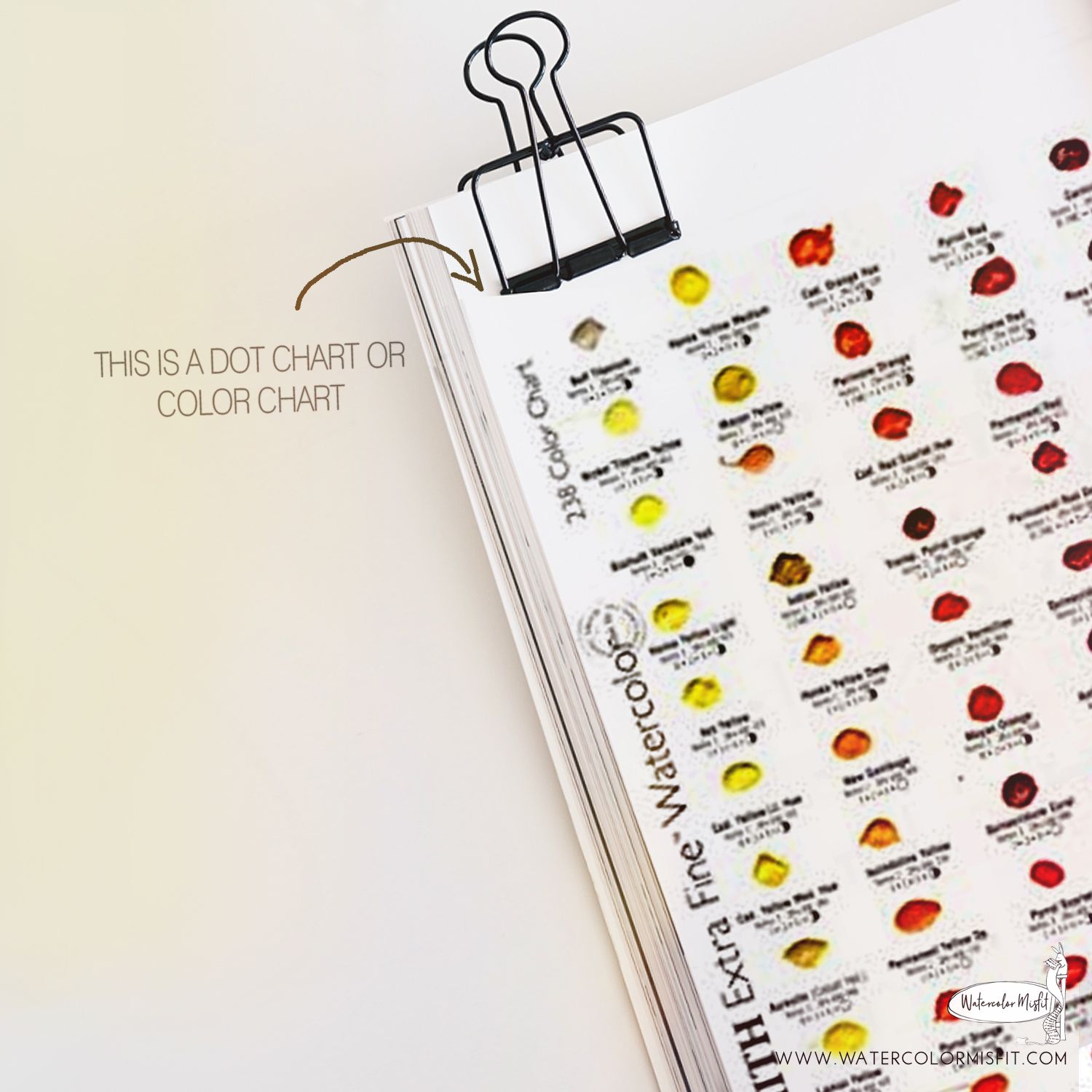
- The solution: one way to test artist grade paints without busting your wallet is to buy dot charts. These charts are mailed to you with small dollops of paint, which you can activate with water and play around with. I absolutely love these — they’ve saved me so much money and helped me refine my palette.
So that’s a quick rundown of student versus artist grade watercolor paint. Hopefully that helped clarify some things for you.