


Short answer: a porcelain watercolor palette is worth it if you paint at least weekly and want an easier, more enjoyable mixing experience. If you only paint occasionally or you’re just starting out, a cheap plastic palette paired with a small porcelain or ceramic dish will get you most of the benefit for a fraction of the price. Here’s why, based on the pros, cons, and my own experience filling and using one.
What’s the Big Deal About Porcelain?
One supply every watercolorist must own is a watercolor palette. It’s a staple for anyone pursuing this art form, but do you really need to invest in a porcelain palette? Is it worth the price and all the hype? Before I share my thoughts, let’s take a look at three advantages and three disadvantages of using a porcelain palette.
3 Advantages to Using a Porcelain Palette
- Larger surface: Most porcelain palettes have a much larger surface area than metal and plastic palettes. That’s because they’re meant to be used as a stationary supply that sits on your desk or work area. A great advantage of this larger surface is mixing space – most watercolor artists love to mix up their own colors rather than using color directly from the tube. By mixing colors on your palette, your paintings will have a more natural, less artificial look than paint straight from the tube.
- Easy clean-up: Another advantage of porcelain is how easy it is to clean. Most plastic and even metal palettes will stain over time from your paint colors, but porcelain rarely stains. So if you want to start from a sleek white surface, it’s simple to wipe up your previous mixtures and start over.
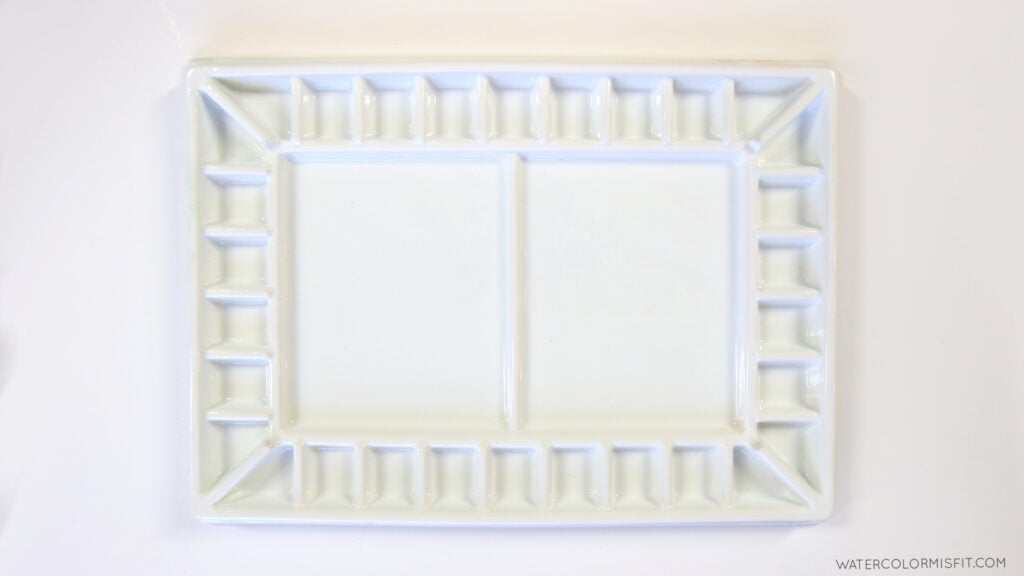
- Pooling: The best advantage of a porcelain palette is how well it pools paint while mixing. This pooling lets you gauge how much paint you’ve mixed, along with the hue and value you’ve created – perhaps the most crucial skill for watercolor mixing, since all three factors affect your washes and glazes. In my own 32-well Jackson’s palette, the wells are deep enough to let paint pool and wet nicely, but not so deep that you burn through a whole tube of paint just to fill one.

3 Disadvantages to Using a Porcelain Palette
- Portability: Now let’s talk about some disadvantages, starting with portability. If you want to travel with your palette, this supply isn’t the way to go. It’s too bulky and heavy to lug around outdoors. As I said earlier, this palette is meant to stay in one location for stationary use.
- Paint problems: Another downside of a porcelain palette is that most don’t come with a lid, meaning your paints are open to the elements. You’ll need a way to cover your paints or risk hair and dust contaminating your colors. Paint can also crack or separate over long periods without use. My own Jackson’s palette is an exception in that it does include a lid, though I’ve found the plastic lid a bit flimsy – it just sits on top rather than sealing, which is a minor nitpick rather than a dealbreaker.
- Price: The last, and probably biggest, disadvantage of porcelain palettes is the price. Most of them cost quite a penny, which brings us to the real question.
Is it really worth it?
In my opinion, yes – if you plan on painting at least weekly and really want to invest in watercolor. This supply makes mixing colors and the whole painting process so much easier and more enjoyable.
That said, if you’re an occasional painter or an absolute beginner, I don’t think it’s worth the investment yet. Instead, I recommend a small porcelain tasting dish or white ceramic plate as a mixing surface, paired with your cheap watercolor palette. That setup gives you the best of both worlds without busting your budget.
So there are my thoughts! If you enjoyed this post, check out my vlog where I set up a porcelain palette and share my thoughts on my new watercolor paint palette. Link is below.
Ready to see the palette I use? This is the Jackson’s Art 32-well porcelain palette shown in the video above (Jackson’s also makes a smaller 19-well version).
Wondering what colors I actually keep filled in this palette? Click here to see the watercolor paints I use and recommend.